

I’ve been drawing a lot more lately. Some with color. Painting, pastels, colored pencils. Others solely with pencil, keeping it black and white.
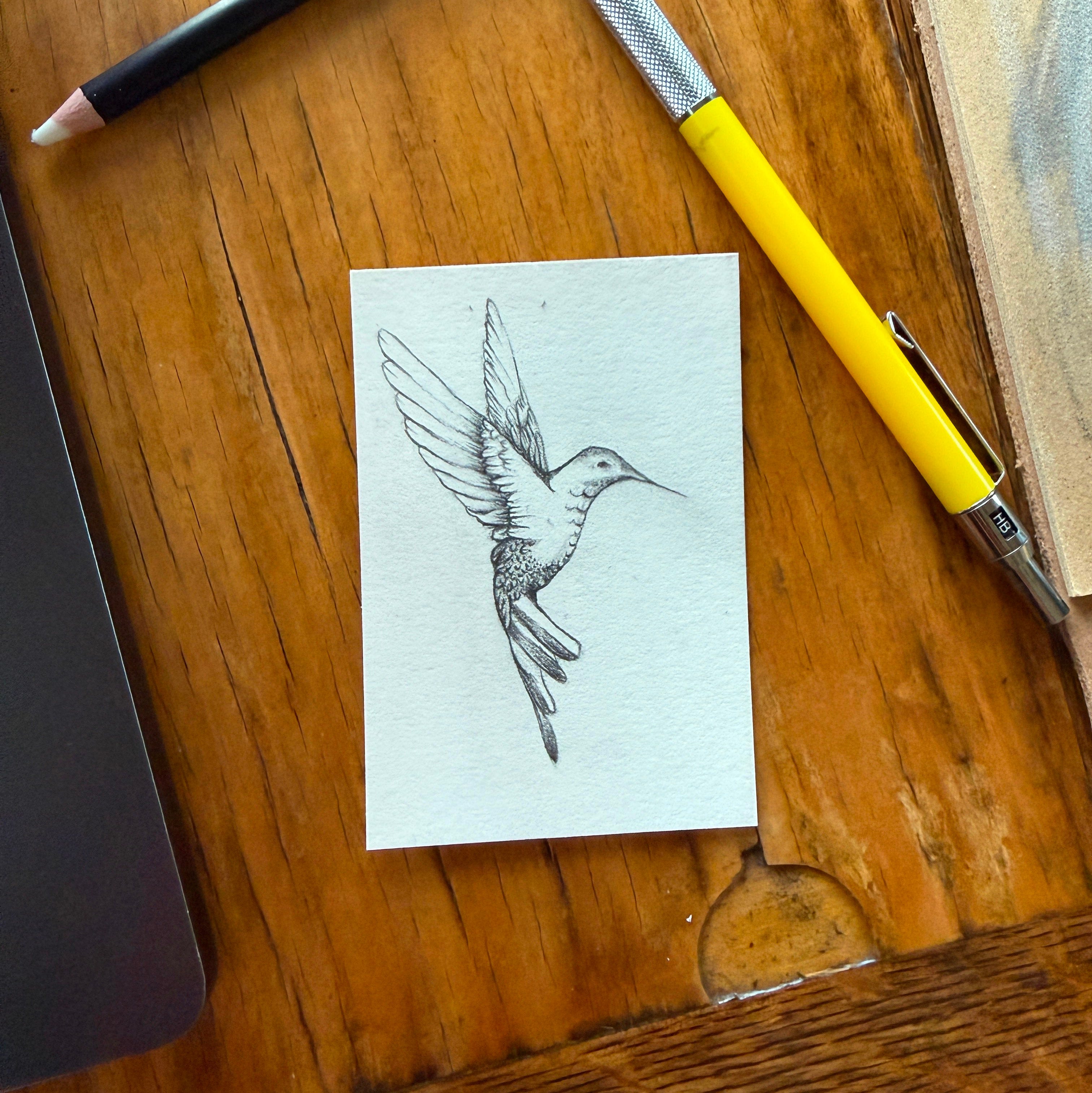
And it’s in these drawings that something keeps being mirrored back to me.
The role of light and shadow. And ultimately, the role of contrast.
Any artist knows that a drawing without shadow is flat. Pleasant, maybe. But it doesn’t breathe. It’s the darkest marks on the page that give dimension to what’s lit. That carves depth out of a surface that would otherwise remain two-dimensional.
And ask any artist about their process. Most will tell you the same thing. They save the highlights for last. The whitest whites, the brightest brights. They come at the very end. Only after the darks have been laid down do you know where the light truly lives. The full range of value can’t be understood until the deepest shadows are in place.
The light doesn’t announce itself without the dark to frame it.
I’m seeing more how life works the same way.
Recently, I said I didn’t want to drive. The traffic, the stress of it. And then, shortly after, something happened with my car, and I couldn’t drive it. Just like that. The thing I had pushed away was taken from me.
And now? Now, I’ll be so grateful when I can drive again.
It would be easy to file this under “the grass is always greener.” That familiar loop of wanting what we don’t have. But I see something deeper is at play here. Something more textured.
It’s not just about appreciation through absence. It’s about what I’d refer to as enlightened intention. The way life seems to respond to our declarations, not to punish us, but to expand us. To offer us the contrasting experience that makes wholeness possible.
There’s a line from a poem I wrote about awakened awareness from last year: each moment is spontaneous enlightened intention, free from karmic residue, pure, unclouded. Contrast is part of how that clarity arrives. We say, “I don’t want this,” and life says, okay. Let’s see what happens when it’s gone. Let’s see what you discover in the space where it used to be.
And what you discover, often, is yourself. Fuller. More awake.
From an integral lens, wholeness has never meant the absence of difficulty. Or shadow. Wilber’s theory reminds us that development happens across multiple dimensions simultaneously. Interior and exterior. Individual and collective. And within each of those dimensions, it’s the tensions. The polarities. The contrasts. These are what generate movement. The journey from fragmentation to wholeness isn’t a journey away from darkness.
It’s a journey that includes it.
Jung said we don’t become enlightened by imagining figures of light but by making the darkness conscious. The shadow isn’t something to transcend. It’s our wholeness, waiting to be claimed. Just as I can’t draw a convincing form without pressing harder into the darks, I can’t live into the fullness of any experience without first knowing its opposite.
This is part of what it means to wake up.
Not to arrive at some permanent state of illumination. But to develop the capacity to hold contrasting truths simultaneously. To be the sky witnessing the storm. To orient from wholeness rather than from the fear of what might be taken. Or the grasping after what’s been lost.
The mundane reveals the extraordinary. The form allows the flow. The absence becomes the frame for a deeper kind of presence.
And so the pencil moves across the page. Pressing in where the shadows fall. Lifting where the light catches.
Not choosing one over the other.
Letting the contrast itself become the teaching.
Emergence with Rachel Weissman is a weekly exploration of the interconnections between consciousness, technology, and planetary flourishing.
If you find this writing valuable, leave a heart ❤️, share it with a friend, and consider subscribing if you haven’t already.
“The form allows the flow.” Beautiful, Rachel💛 and gorgeous drawing, too!